
01
Residential Interiors
Comfort heating products for living rooms, bedrooms and private spaces.

FLEXIBLE SURFACE HEATING TECHNOLOGY
Metal-oxide semiconductor flexible heating film brings surface heating technology into buildings, interiors and a broad range of finished products.
A metal-oxide semiconductor functional layer is deposited on a PET substrate to create a lightweight, flexible surface heating element. Product engineering then adds insulation, protection, controls and structure for each application.
See how the heating technology works ↗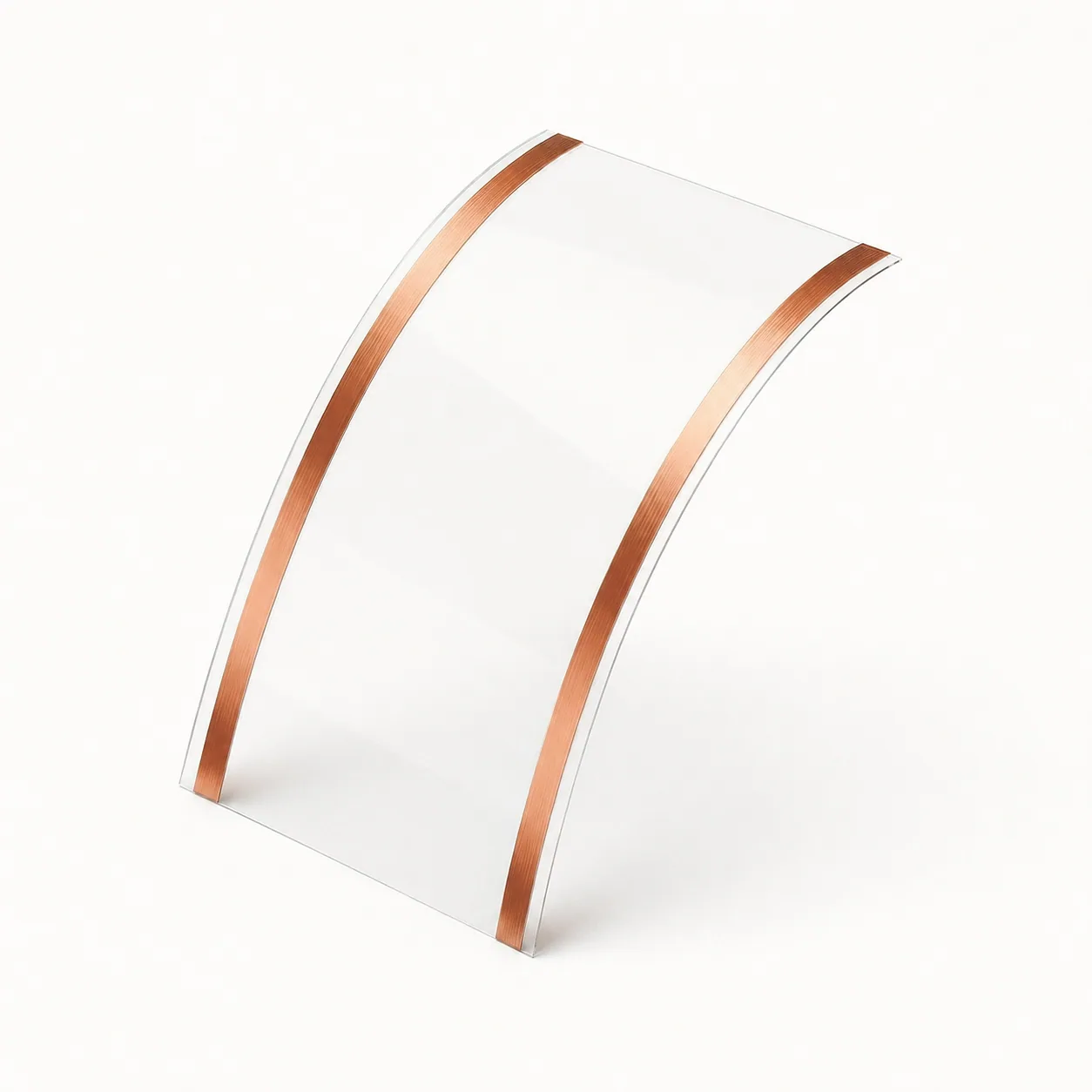
Select a product to view its application, construction and operating concept.
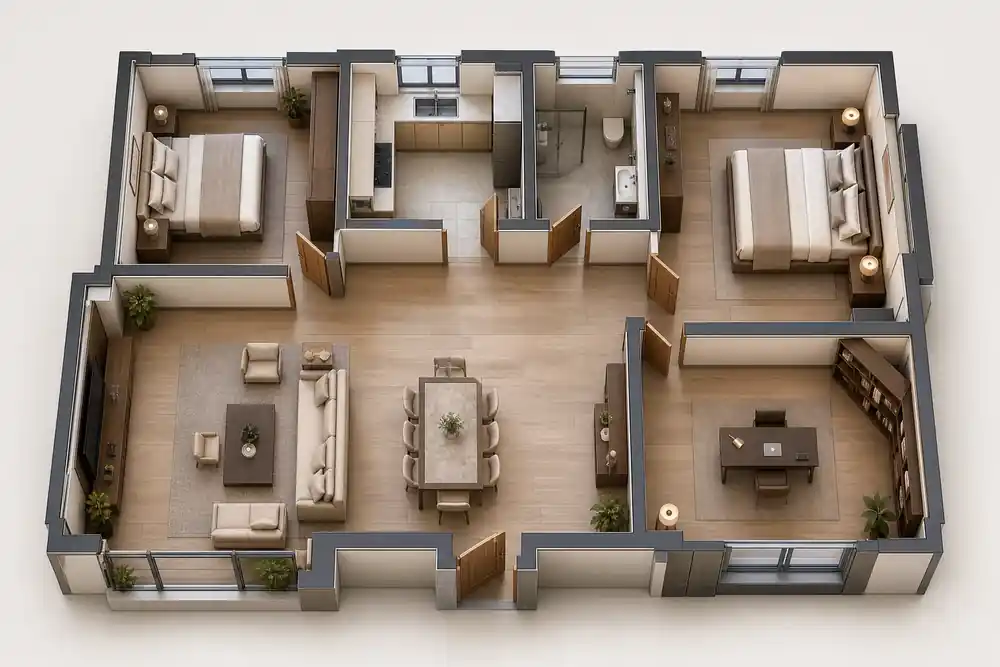
Typical uses include residential interiors, commercial spaces, building renovation and OEM product development.
Comfort heating products for living rooms, bedrooms and private spaces.
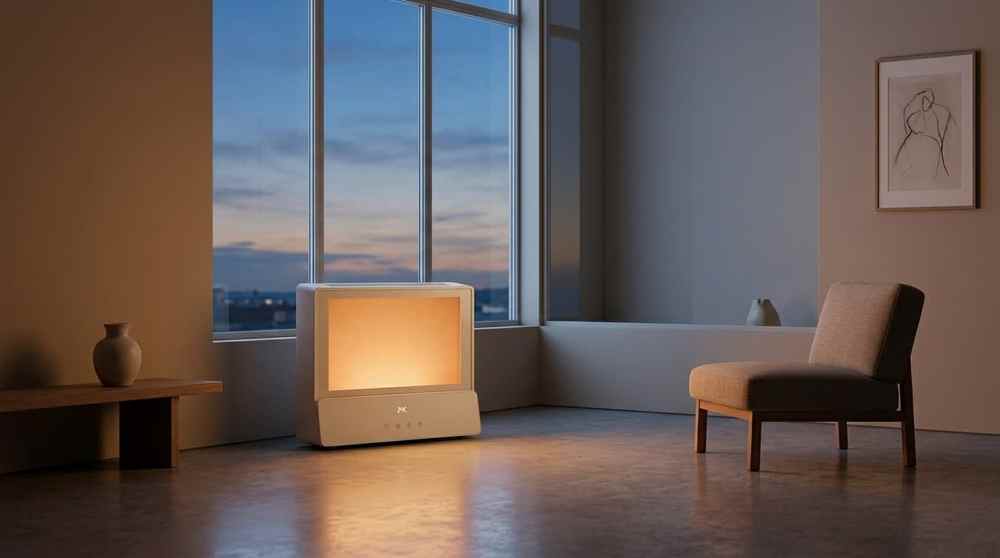
Quiet, zoned electric heating for offices, hospitality and intermittently used spaces.
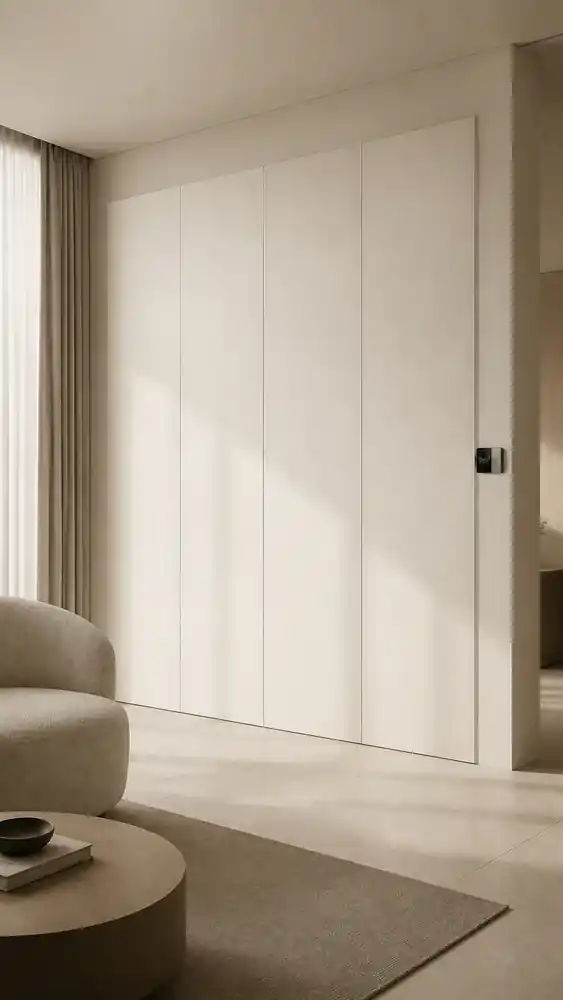
Dry and lightweight solutions that reduce the need for major pipework changes.
A flexible heating platform for brands developing new thermal products.
Answers to frequently asked questions about metal-oxide semiconductor heating, far infrared radiation, radiant comfort and project evaluation.
It uses a specially formulated oxygen-deficient N-type metal-oxide semiconductor as the electrothermal conversion medium, formed as a nanoscale functional layer on PET. This inorganic wide-bandgap material uses a wurtzite hexagonal lattice and is designed for high light transmission, stability and long service life. Under an electric field, carrier excitation and relaxation release radiant energy concentrated in the far-infrared range while creating a surface heat field. Exact spectra, performance and safety should be confirmed by test data for the specific model.
Its thin, flexible and large-area heating form supports even surface heating and integration into walls, floors, heaters and decorative products. Quiet operation and zoned control are achieved through the complete product, controls and system design.
Far infrared is non-ionizing electromagnetic radiation beyond visible red light. We feel radiant warmth when infrared energy is absorbed by people and objects, much as sunlight can feel warm on a cold day. Infrared radiation is a normal form of energy transfer; safe use still depends on product design, surface temperature, electrical protection and installation.
William Herschel identified infrared radiation in 1800. While measuring temperatures across the colors produced by a glass prism, he detected the strongest thermal effect just beyond the red end of the visible spectrum.
Infrared heaters emit radiant energy that is absorbed or reflected by walls, floors, furniture and people. Reflected energy continues through the room until it is absorbed, gradually warming surrounding surfaces. The result depends on output, wavelength, distance, room geometry, surface materials and controls.
Radiant heating transfers energy directly to people and surrounding surfaces instead of relying only on warming and circulating air. This can create a gentle, even sense of warmth while room ventilation remains essential. Comfort depends on radiant temperature, air temperature, humidity, clothing and exposure time.
Because radiant systems can operate without a fan, they may create less forced air movement and dust disturbance than fan-driven heating. Heated surfaces can also support a more even comfort profile. These are comfort characteristics, not medical treatment claims; suitable temperatures, ventilation and product instructions remain important.
Please share the destination country, voltage and frequency, application, target dimensions or heating area, ambient conditions, surface material, control requirements and expected volume. This allows us to recommend a relevant product route rather than a generic specification.
Share your country, application, target size, voltage requirement and expected order or project volume. We will use this information to identify the most relevant product route.